
While I was writing a previous post on the origins of steampunk, inspired by a trip to Wuppertal, it occurred to me that I’ve actually been to several other very “steampunk” locations in Germany since moving here. As a country that boomed during the industrial era, it has a lot of these to offer, but they’re sometimes off the beaten track and not the first attractions listed among the ‘must-sees’ of a region (often displaced by castles or quaint villages, which I can completely understand!).
As a writer of science fiction and fantasy, however, these places filled me with a particular kind of thrill and wonder, as if I’d been transported into another century or stepped into the pages of a novel. Steam-era architecture, giant cogs, brass finishes, steel rivets, historic machines, old fonts… it all felt like fertile inspiration just waiting to be transformed into a steampunk tale or artwork.
It occurred to me that maybe other lovers of the genre, or just generally of historical places, might feel the same way. So in case anyone else finds themselves in Germany and looking for a similar experience, I thought I’d share a list of the most impressive steampunk-ish destinations I’ve visited, and highlight some fascinating things I learned about both the lighter and darker sides of their history:
1. The Völklingen Ironworks


The Völklinger Hütte is a colossal ironworks in the south-western German state of the Saarland, close to the French border. Now a museum, it’s a weird fluke of history that it still exists at all. It started in the 1880s, but when the economics no longer made sense a century later, it wasn’t torn down and scrapped like many others at the time. The cost of demolition was too high. Instead its historical significance was recognised, and it eventually became a UNESCO world heritage listed site in 1994.
It is the world’s only fully intact ironworks from the industrial era, and it’s HUGE. You can literally spend the day here, exploring exhibits and dark passageways, climbing steel towers, traversing giant machine halls, admiring extremely steampunk gadgetry, stepping over abandoned train tracks. It is a truly fascinating place, and in some parts you really feel you’ve stepped into another world.
On a sadder note, my visit also taught me what happens to a town when its primary source of employment disappears. Venturing through the streets outside the ironworks, I couldn’t help but notice the cheaply built shopping mall and the once grand but now dilapidated turn-of-the-century buildings. The local taxi driver who drove us to the museum – a woman whose husband used to work at the ironworks – referred to it with some bitterness as “the scrap heap” (der Schrotthaufen). For her, it represented memories of better times. Yet even that boom and bust is part of the history explored in the museum, just as are the dark chapters during both world wars when forced labour was used here.
2. The Old Elbe Tunnel in Hamburg
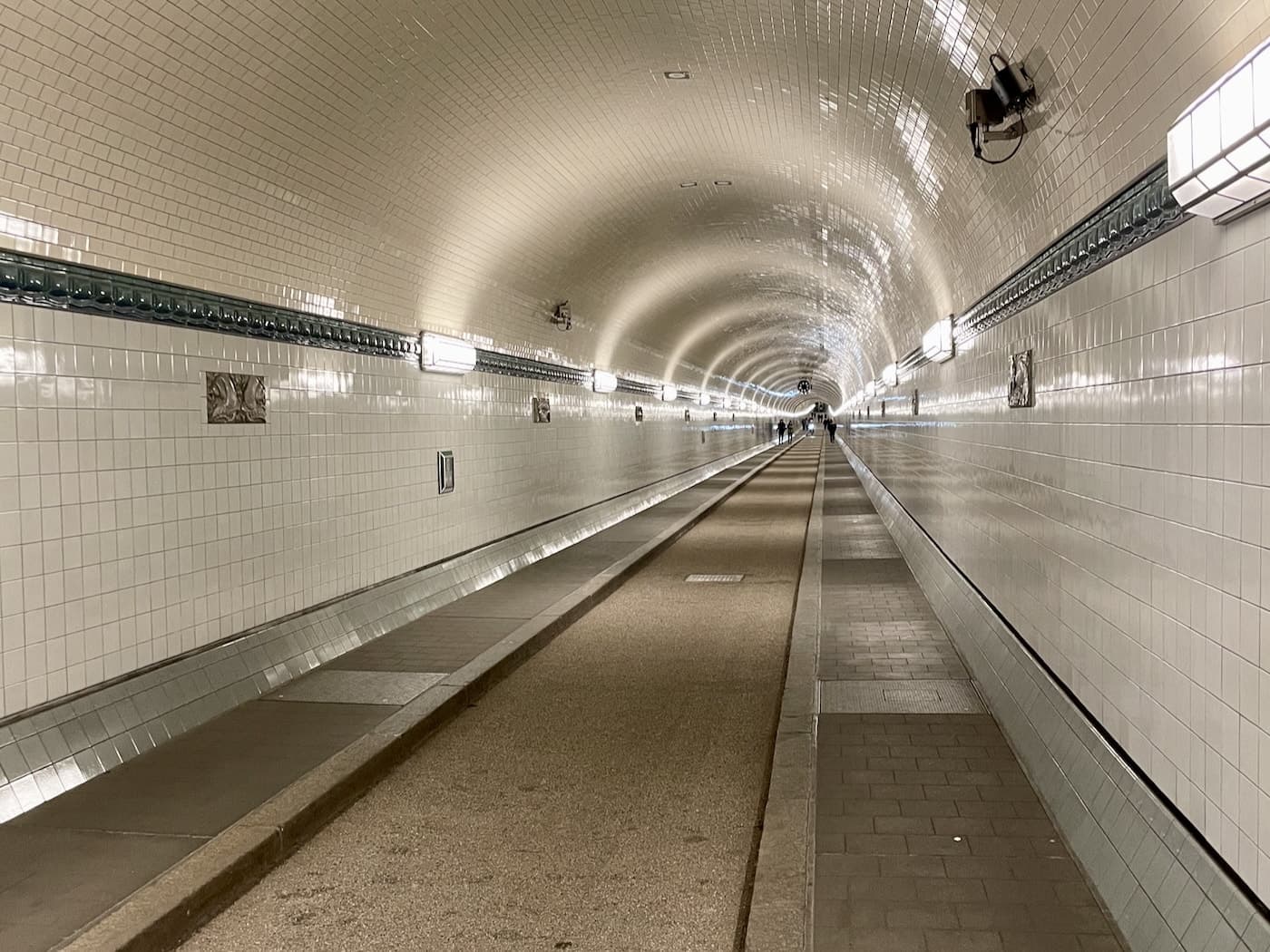


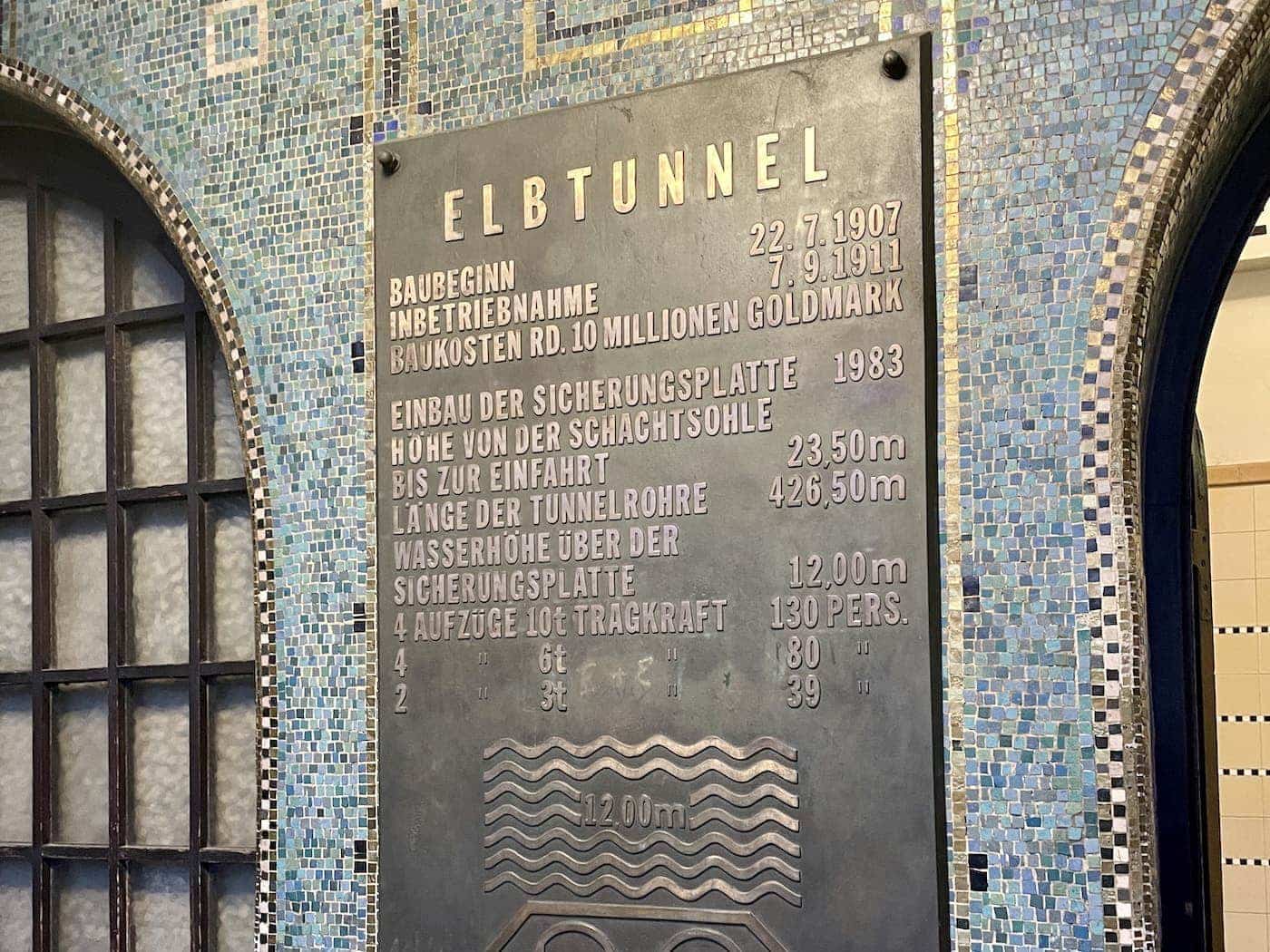

You might think a tunnel would be a boring thing to visit – not so with the Alter Elbtunnel under the Elbe river in Hamburg, which was a technical marvel when it opened in 1911. Your journey begins at street level in a domed building, where you have two choices: board a giant, extremely steampunk elevator (which still has an attendant to run it for you!), or descend a spiral staircase down the silo-like structure to the bottom. There, begin your stroll past tiled walls and period light fixtures from another era, then enjoy the same elevator-or-stairway experience up on the other side.
The tunnel was, amusingly, originally intended to be used by cars (which shows you how much bigger cars have gotten since then). Now it’s reserved for pedestrians and cyclists. One of the things I love about it is the same thing I loved about the suspension railway in Wuppertal – namely that it remains a totally normal means for locals to get around the city. Sure, there were tourists like us in there, but there were also bored commuters on bikes waiting for the elevator, still just using it for what people used it for back in 1911: getting from one side of the river to the other.
On a side note, it’s not exactly ‘steampunk’, but the Miniatur Wunderland nearby is also well worth a visit, especially on a guided tour. Book well in advance though – it’s Germany’s most popular museum!
3. The Planetarium in Hamburg
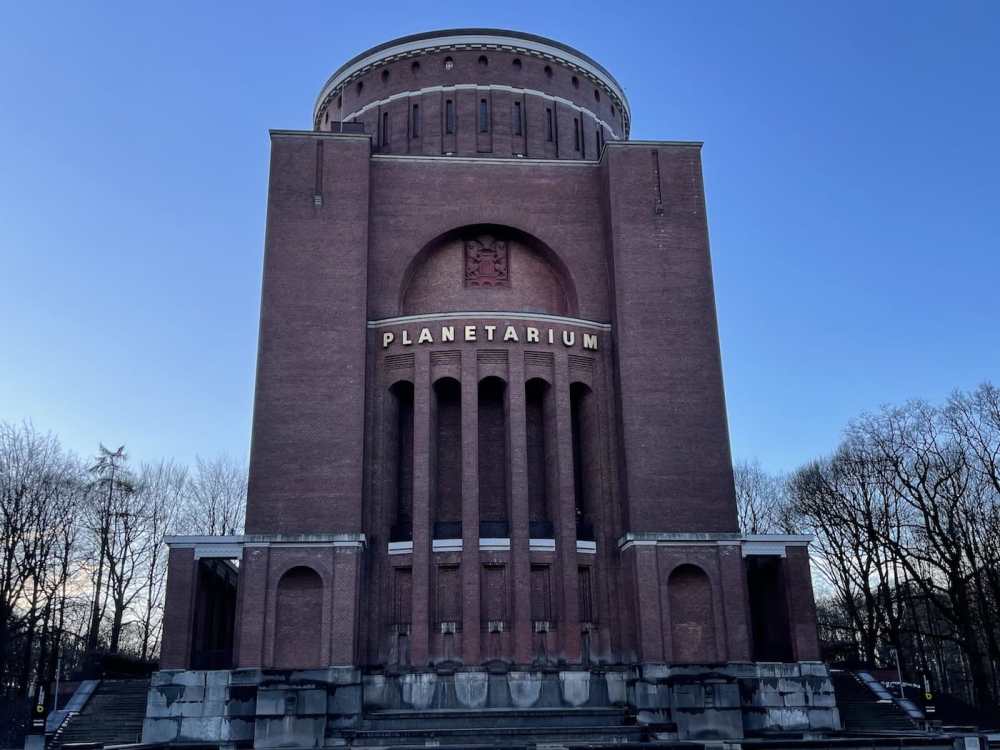
Another one in Hamburg! Honestly, Hamburg is just generally great for steampunk vibes – the whole Speicherstadt harbour area is brimming with historic industrial buildings, canals and bridges. The Planetarium, however, deserves specific mention.
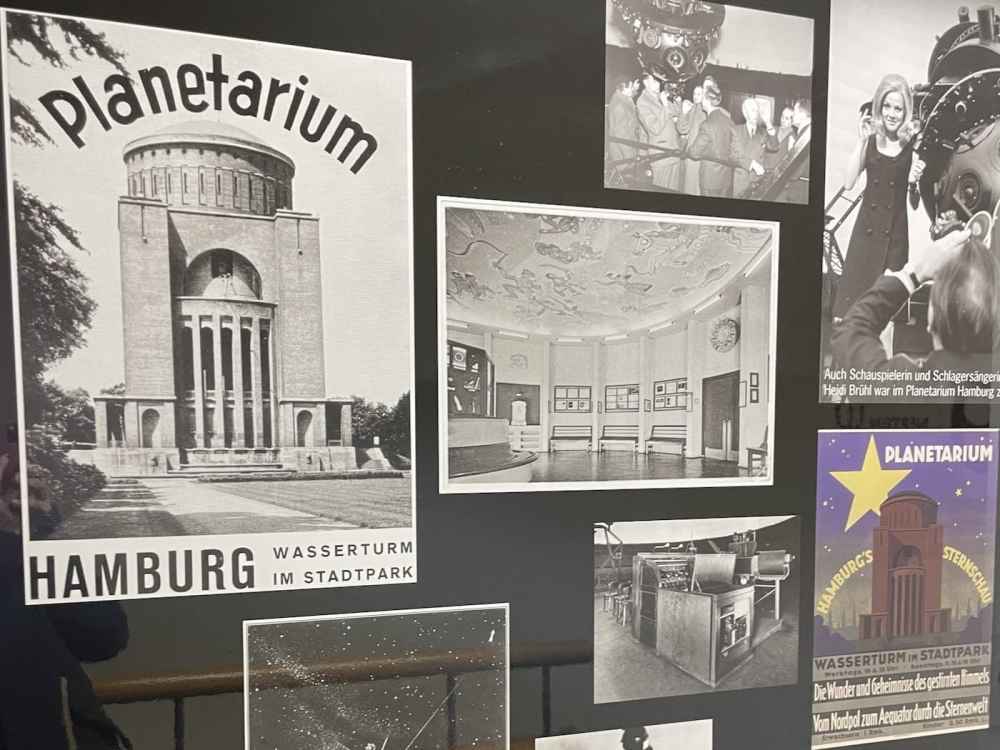
This is not your typical tourist destination, since it’s farther from the city centre, but it’s one of the oldest planetariums in the world. It was initially a water tower, but an early Zeiss projector (which itself looks like something out of Dr Who) was showing audiences the heavens here as early as 1930, and it has been a planetarium ever since. It is still offering modern, high tech space shows, so you can admire the Art Deco architecture and photos of galaxies and nebulae in the waiting area, then head in, relax into a reclining seat under a dome-shaped screen, and take a trip through the universe.
To experience the history fully, take the lift up to the viewing platform, enjoy the view, and then walk down the stairs (or just take the stairs in both directions), because there’s a little wall of historic info and posters in the stairwell on the upper level, and the stairs themselves are historic.
4. The Suspension Railway in Wuppertal

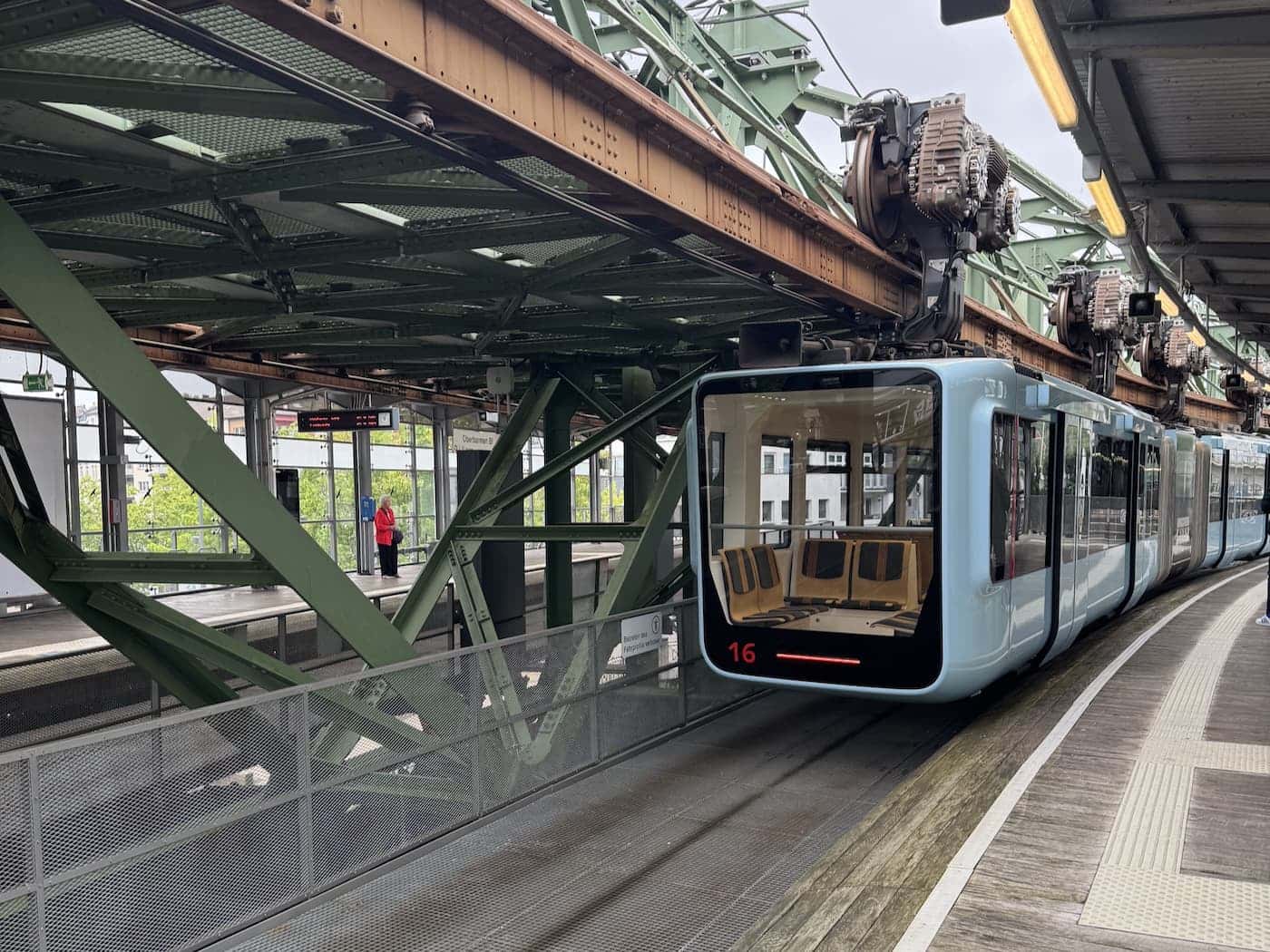
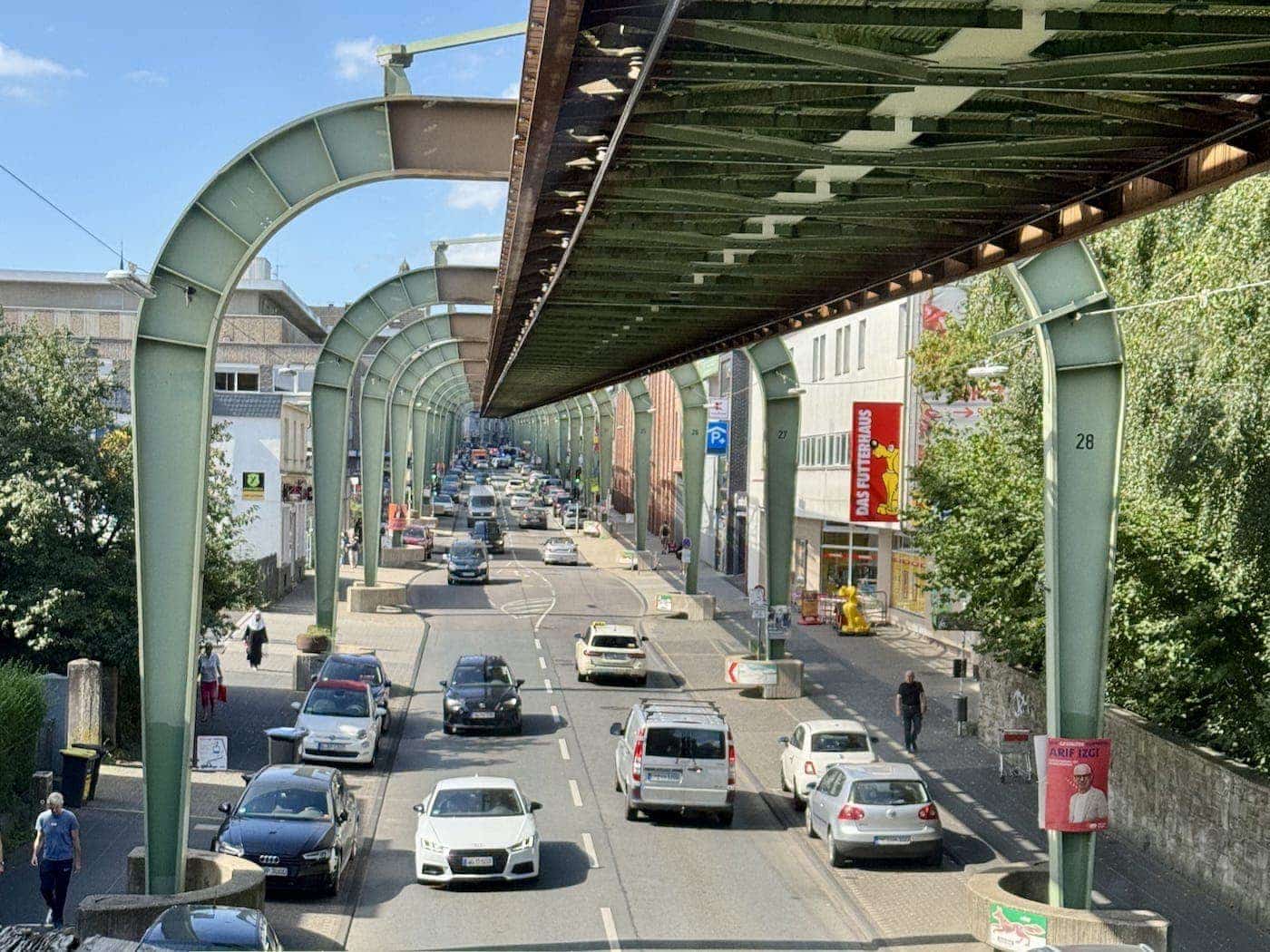

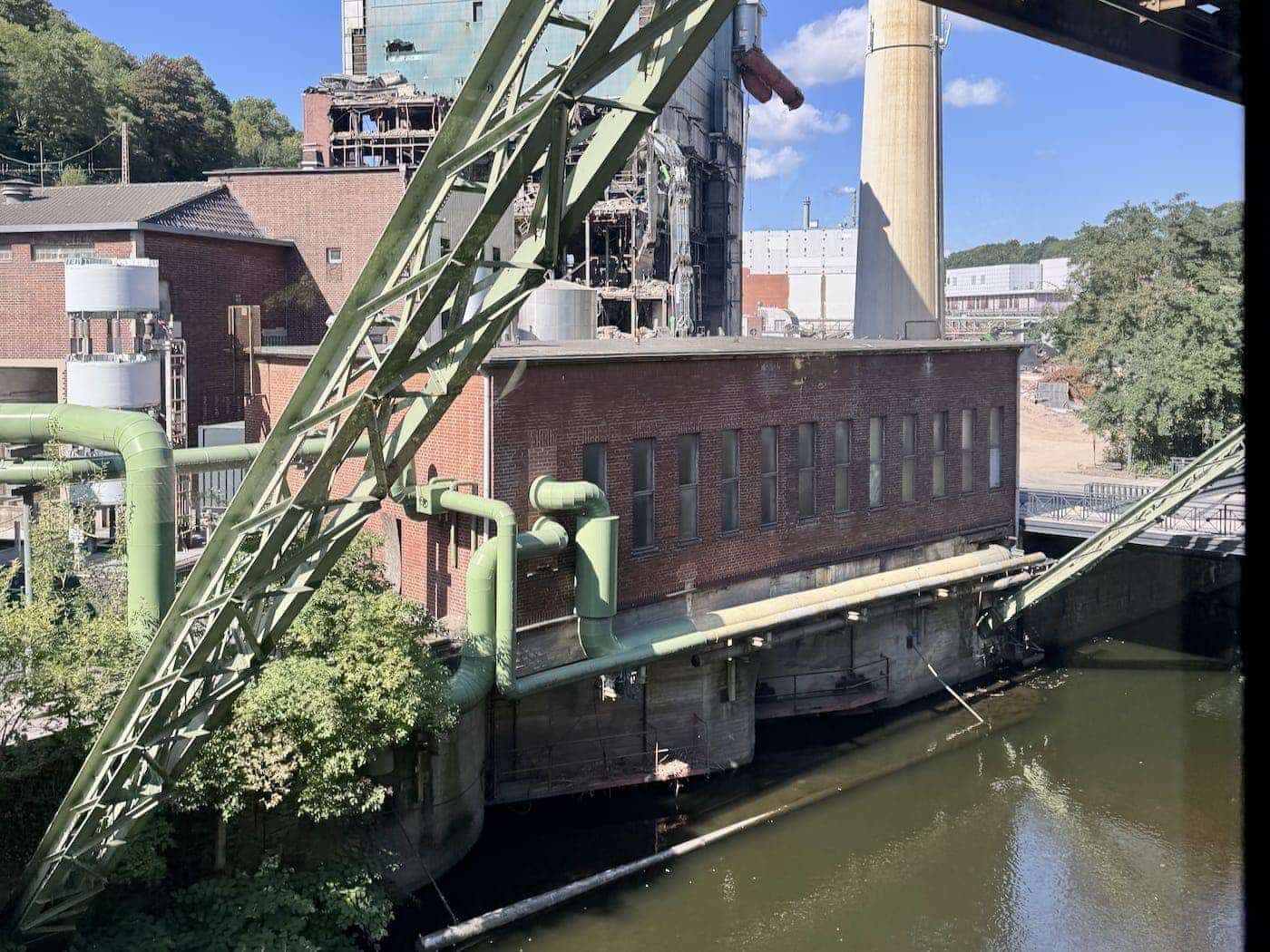


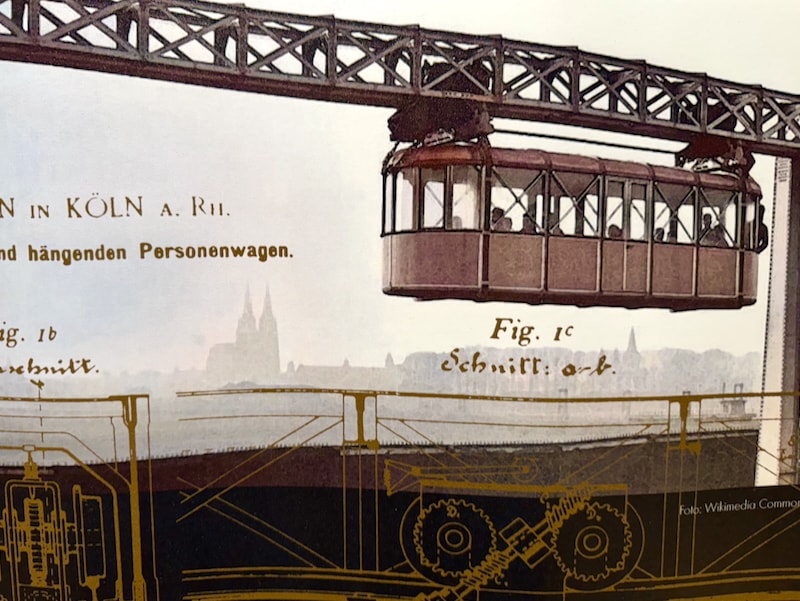
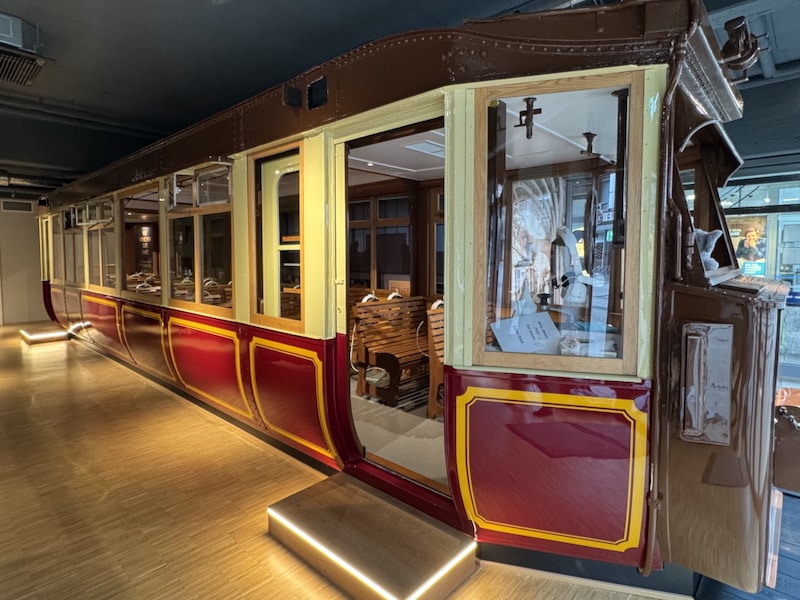
I mentioned this in my last post already, but it definitely belongs on this list. Finished in 1901, the Wuppertal Schwebebahn is the oldest suspension railway in the world. The carriages hang from steel tracks built over the Wupper river and wind through a cityscape that retains old brick buildings and bridges. Several stops have been rebuilt in the original style, such as the one you exit through to get to the Schwebodrom, a museum with an artistic light show and a VR experience that is well worth a visit.
As for a tidbit I forgot to mention in my last post, one of the most famous episodes in the history of the Schwebebahn is that of Tuffi the elephant. In a publicity stunt, a circus owner decided to promote his circus’s arrival in town by taking a young elephant onto the suspended railway. A short way into the journey, Tuffi panicked, crashed out of the carriage, and plunged into the Wupper river. Miraculously, she survived unharmed, and lived until the 1980s. The story has become local legend, and there’s an elephant statue in the river to mark the spot she fell. I couldn’t help but notice that even this felt like something from a novel or film, replete with a circus showman attempting a dangerous stunt.
5. The Zeppelin Museums in Friedrichshafen and Meersburg

Vintage book on display. Zeppelin Museum, Meersburg. 
Menu from the airship’s first world tour in 1929. Zeppelin Museum, Meersburg. 
Blueprint of the Graf Zeppelin LZ127 airship. Zeppelin Museum, Meersburg. 
Commemorative pins. Zeppelin Museum, Friedrichshafen. 
Children’s toys. Zeppelin Museum, Friedrichshafen. 
Size comparison of the Hindenburg with an airbus A380. Zeppelin Museum, Friedrichshafen. 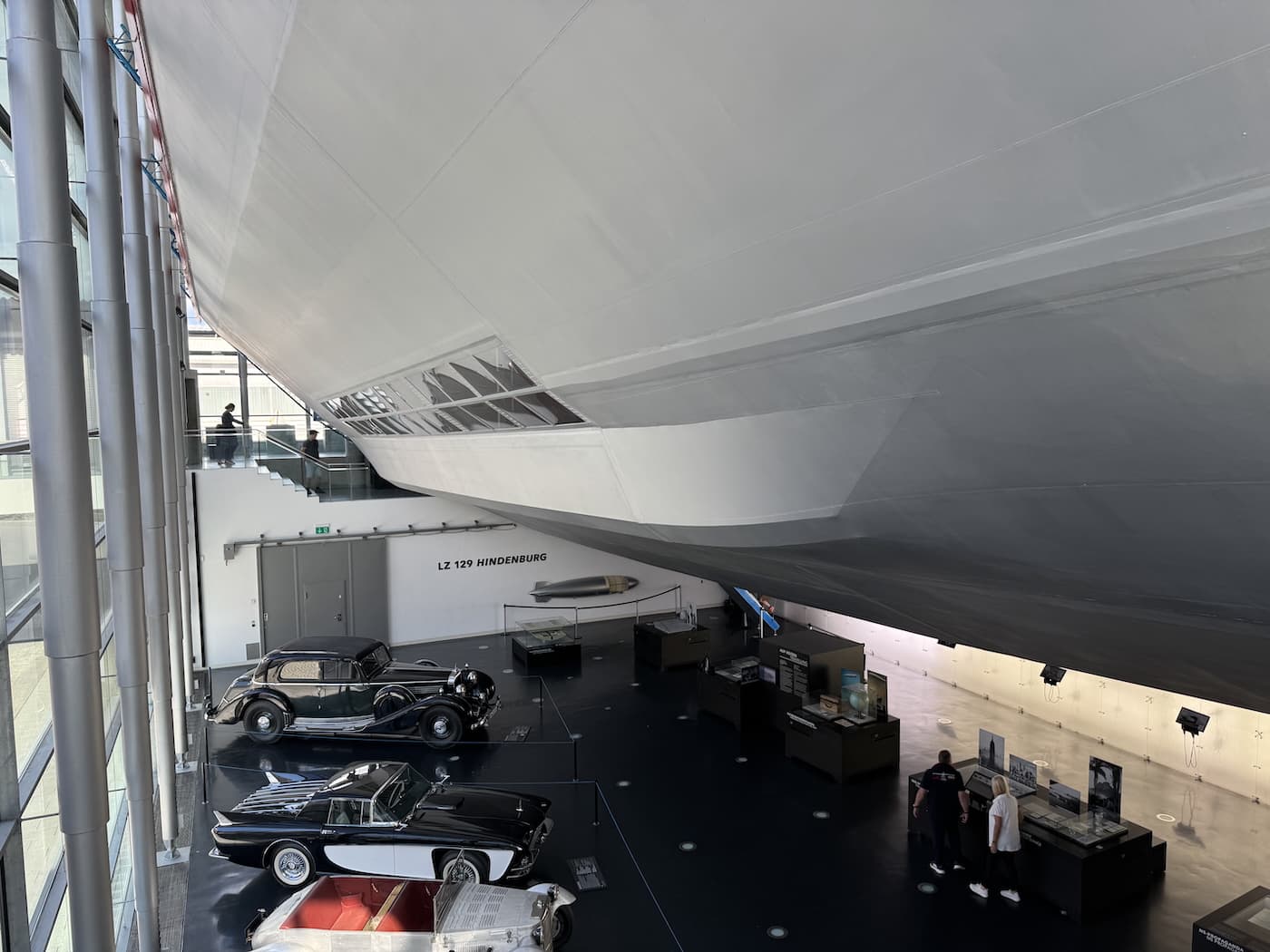
To-scale reconstruction of part of the Hindenburg. Zeppelin Museum, Friedrichshafen. 
To-scale reconstruction of the lounge area on the Hindenburg. Zeppelin Museum, Friedrichshafen. 
To-scale reconstruction of a sleeping cabin on the Hindenburg. Zeppelin Museum, Friedrichshafen.
Lake Constance is the home of Graf (Count) Zeppelin, the inventor of the airships that inspired many a steampunk story. To be honest, I knew little about zeppelins, so I approached my first museum visit with the mild curiosity of a tourist trying to fill an afternoon. I left, however, so fascinated that I went to another museum a few months later… yes, there are two zeppelin museums.
The small one-room Zeppelin Museum in Meersburg houses a private collection and is staffed by a local volunteer – an older lady with boundless knowledge about zeppelins. It was packed to the rafters with original items, from on-board menus and telephones to advertising material and branded tea sets, as well as old photos and diagrams, all of which had an incredibly steampunk aesthetic.
The other Zeppelin Museum in Friedrichshafen is much larger and more modern, with an original to-scale replica of parts of the Hindenburg that you can walk through (awesome!), interactive displays, extensive exhibits (that are also available in English, I’m not sure how I’d have fared in the smaller museum without speaking German) and a collection of original remnants and paraphernalia.
Both are great, though I went to the smaller one first, and I must admit, it had an old-school “cabinet of curiosities” vibe and novelty factor that charmed me a tad more.
Today we tend to think of zeppelins as doomed inventions that went up in flames, but they were in use for almost a 40 year period and rivalled sea ships for inter-continental voyages. I was fascinated to learn how massive the Hindenburg was (it makes an A380 look small), what a zeppelin looked like inside (the outer shell is not directly filled with gas, as I had assumed, but with gas balloons and a metal frame), how expensive flying on them was (passengers were mostly rich men – a ticket cost 6-12 months of crew member’s salary) and that they were briefly used in WWI by both Britain and Germany.
____________________________
Would any of these destinations make it on to your own travel wish list? Or have you already been to one? Are there other “steampunky” attractions I haven’t listed that are also worth a visit, in Germany or elsewhere? Let me know in the comments!
Discover more from Thoughts on Fantasy
Subscribe to get the latest posts sent to your email.

A fascinating range of inspiring settings – and I’m impressed at the gallery of images to go with each site.
My most recent steampunk type location was the Mull of Galloway lighthouse which has a refurbished foghorn that required some restored Victorian diesel engines to compress the air needed to power the foghorn.
https://mull-of-galloway.co.uk/albums/foghorn/
Another more modern site that looks like it ought to be steampunk is the Falkirk wheel rotating canal boat lift – though it’s more fun to watch than to ride in I think!
https://www.scottishcanals.co.uk/visit/canals/visit-the-forth-clyde-canal/attractions/the-falkirk-wheel
LikeLiked by 1 person
Oh yes I think I’ve seen videos of that Falkirk wheel boat lift – amazing!! So bizarre, it doesn’t look like it should actually work…
I love the sound of the Mull of Galloway lighthouse! You’ve reminded me that lighthouses with machinery from that era can be very steampunk-ish. I feel like I might even have read a steampunk novel that used a lighthouse setting? 🤔 Though I can’t remember the details…
LikeLike
Interesting post. What did they produce at The Völklingen Ironworks? And then this railway that goes straight though a building! The only places where I saw something similar was in Kuala Lumpur and in Bangkok.
LikeLiked by 1 person
I think they mostly just produced raw iron to be turned into products elsewhere – but possibly also steel beams. And yes I love the way the railway goes right through that building!! That’s one of the stations.
I haven’t seen the monorails in Kuala Lumpur or Bangkok, but if I go one day I’ll have to check them out!
LikeLiked by 1 person
The planetarium looks like amazing architecture.
LikeLiked by 1 person
Yeah it was something special – when I first saw it I thought it looked like something straight out of the 1920s film ‘Metropolis’!
LikeLiked by 1 person
So cool! Thank you very much for the beautiful pictures of Völkingen ironworks. I visited the Elbtunnel years ago, quite an eerie feeling to walk there and at the same time beautiful.
LikeLiked by 1 person
Glad you liked the pics! And cool you’ve been in the tunnel too, it does have a slightly eerie vibe now you mention it! I went in winter so that added a moody atmosphere going in and out as well.
LikeLiked by 1 person
Finally catching up with these very engaging and interesting newsletters! Thanks for enlightening me with the origin and context of steampunk. I now suddenly remember seeing Le Voyage dans la Lune, restored in colour, at a filmfestival some years ago. Never realised that zeppelins were used for so many years. And I’m glad that Tuffi survived her plunge in the river (would’ve loved it even more if she galloped away into the wild ;-)). – Looking forward to your next post!
LikeLiked by 1 person
Wow that would have been cool to see a colour restored version, I’ve only ever seen it in black and white. And true, that would have been the more fairy tale ending to Tuffi’s story!
I’m still travelling at the moment so I’ve been slow getting my next post out, but I have the beginnings of one in the works, so eventually I’ll get back into the swing of things here. I hope your writing is going well – looking forward to your next post too!
LikeLiked by 1 person
Pingback: My top 5 steampunk destinations in Germany – THE FLENSBURG FILES