When all is not as it seems: the tantalising wrongness that precedes epic twists

Old spiral staircase from above tiles with repeating floral patterns
Photo by Nick Fewings on Unsplash

I haven’t updated my blog in a long time – 5 years to be exact. When COVID hit I let it slide, then got busy with life and other projects, including writing two novels 🙂 But I always intended to return to it “one day”, and it seems that day has finally arrived. I’m planning to start posting again once or twice a month, so I’m not sure how many of you are still out there receiving this message, but I hope you’ll continue this journey through the fantasy-verse with me!

___________________

I was recently thinking about one of my favourite novels, Piranesi by Susanna Clarke, and it reminded me that there’s a quality some science fiction, dystopian and speculative fiction stories have—a rare one—that I absolutely love. It’s hard to describe, and perhaps even harder to achieve, but I’d characterise it as a tantalising sense of wrongness intertwined with mystery, often (though not always) occurring at the beginning of a story, which usually precedes a giant, reality-altering twist.

It’s that growing conviction that things don’t make sense in the world, that something very odd is happening, perhaps even something sinister, but you don’t know what it is yet. You just have this sense that the situation is off, wrong somehow, and that you, and perhaps even the characters, have a fundamental misunderstanding of the reality in which they find themselves. At the same time, you can feel in your bones that you are going to find out what it is, and that when you do, it’s going to be a hair-prickling revelation or a fantastically unexpected twist. This feeling seems to often be evoked when the initial story world, or simply the story we think we are about to be told, is increasingly questioned, then ultimately flipped on its head.

Some sci-fi examples that come to mind are the films Moon, Source Code, and The Island, and the TV shows Westworld and Paradise, but I’ve also encountered a similar feeling in fantasy and dystopian novels like Piranesi and Wool. Additionally, I can think of stories that don’t necessarily ‘throw us in the deep end’ at the start, but that still instil a strong sense of the uncanny and unknown at certain points in the narrative: Project Hail Mary, Groundhog Day, Edge of Tomorrow, Meet Cute, Arrival (and the short story it is based on, ‘A Story of Your Life’), The Prestige, and The Sixth Sense.

What always impresses me about these sorts of story openings is that usually, as a writer, confusion is the last thing you want to create. Conventional wisdom suggests you should clearly communicate the scenario at the outset, withholding some mysteries and raising some questions, but still grounding the audience as quickly and succinctly as possible in your world and characters. If they get lost in a sea of confusion or snag on inconsistencies and plot holes, they might abandon ship. 

Yet these particular types of stories seem to offer just enough grounding for us to understand what’s happening on the surface, while at the same time introducing just enough dissonance to make us aware things aren’t adding up… a perfectly calculated dose of confusion that promises you’re on the cusp of a fascinating resolution.

I adore the goosebump-inducing curiosity this mixture evokes… a kind of “Wait what? Something’s not right here…” that has me hungry to figure out “the truth” of the situation. But what is it about these stories that creates this tantalising feeling?

Continue reading

Getting The Last Line: 10 Kinds of Closing Sentences

Writers spend a good deal of time fretting about the opening sentence of their novel, just as readers enjoy quoting first lines from their favourite books. This is understandable, given so much is riding on that first impression. But what about closing lines? What about the final words that resolve the story and linger in a reader’s mind after they shut the book?
Continue reading

The Power of Competitions and Selections in YA Fiction

If a best-selling young adult novel sucks me in after only a few pages, it’s often because the book is wielding a secret weapon. Or rather, a not-so-secret weapon, because I’ve seen it many times before. And although I recognise it, it still has the power to peak my curiosity and get me rooting for a character I know next to nothing about. So what is this clever trope?

It has two components, and these usually form a kind of structuring device that shapes the plot and climactic points of the novel: Continue reading

Loved It, Hated It: A Wizard of Earthsea, Angelfall and The Knife of Never Letting Go

Sometimes when I’ve absolutely adored a book and given it 5 stars, I do something a little counterintuitive. I go to Goodreads and I scroll down till I find a one star review and read it. Why? Because it has always fascinated me how much people’s taste in books can differ. I wonder how a book I thought was amazing has inspired someone else to launch into an angry rant, or vice versa. Continue reading

Books That Made Me Cry: Fantasy, Sci-fi and Dystopian Tearjerkers

Last week I mentioned some reasons why movies are usually bigger tearjerkers than books for me. However, there are still several books that have prickled my eyes or had me in tears, so today I thought I’d pay tribute these emotional tales.

Before I begin: this list will include SPOILERS. Discussing the sad moments in books necessarily involves mentioning character deaths and tragedies, and while I’ll try to keep it vague, I can’t promise I won’t give away too much. So if you haven’t read one of these books and don’t want a key plot point revealed, I suggest skipping the second paragraph of each section. Continue reading

The Power of “What If?” Premises in Science Fiction and Fantasy

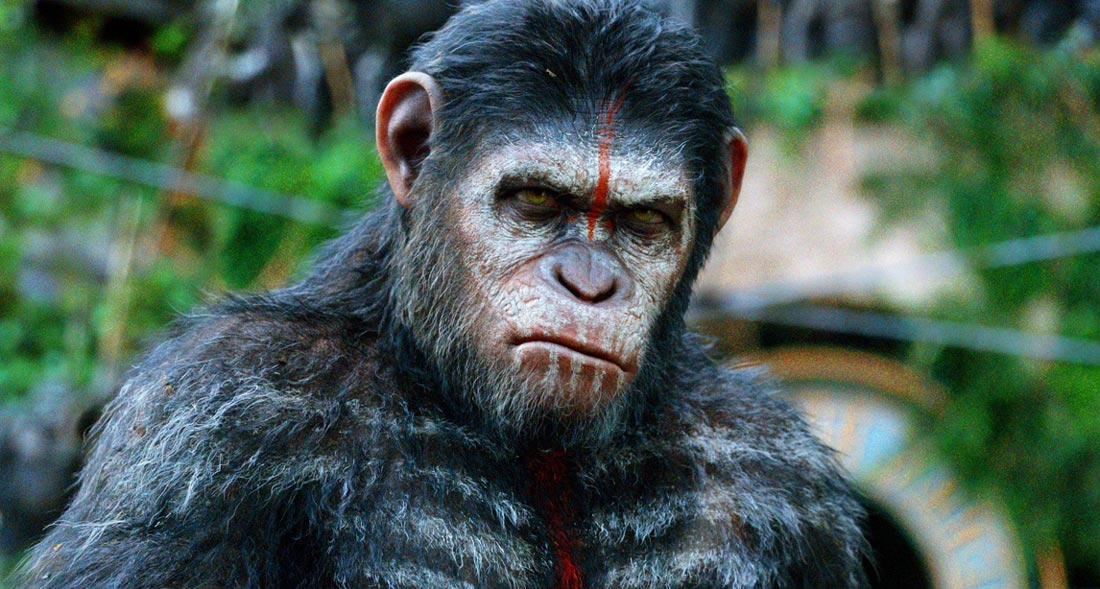
Image: Dawn of the Planet of the Apes

There’s no doubt that a really good “what if?” scenario – a fascinating premise that envisions a society or world with a pivotal difference to our own – is a big hook for a speculative fiction book or film. An intriguing premise will almost always entice me to go see the film at the cinema, particularly a science fiction film.

On the whole, science fiction does these “what if” scenarios really well (especially dystopian sci-fi), and the concepts are memorable. I’m sure many people could guess which popular science fiction films the below scenarios refer to: Continue reading

Why the End of the World Will Never Get Old

X-Men Days of Future Past Poster

I recently went to the cinema to see the latest X-Men film, Days of Future Past. I’m a massive fan of the X-Men series, and to date none of the films have disappointed me. This newest instalment was no different. I loved it. A thoroughly entertaining and gripping addition to the franchise.

However, it gave me a slightly different emotional experience to the other six films. Not in a bad way, I still enjoyed it, but the experience of watching it just felt a little… different.  Continue reading