
If you’ve read the Harry Potter series, the name Bathilda Bagshot might be familiar to you. You may even recognise her as the author of Hogwarts, a History, a book to which Harry’s friend Hermione regularly refers in the series. Whenever the characters need to know something about the ancient castle they go to school in, Hermione is there, spouting “historical” facts from Bagshot’s work to help them solve their problems.
Fantasy
Sex Scenes in Fantasy Novels: When Do They Work?

Orchid at the Pittsburgh Botanic Gardens, 2011. Photo by Nicola Alter (CC BY SA 4.0)
Growing up, most of the fantasy novels I read didn’t have sex scenes. Perhaps they had a little romance, maybe some kissing, but nothing I would classify as a proper sex scene, or even an illusion to a sex scene. A few, of course, did have scenes that were a little raunchy… but I remember finding those awkward and out of place. Continue reading
Learning a Fantasy Language? Apparently There’s an App for That

I work part time at an institute that runs classes in a whole range of foreign languages. Real-world languages, that is – like French and Arabic and Japanese. On our feedback forms at the end of each course, we ask students to suggest any new languages that they would like us to offer in the following year. One day a colleague came to me, confused, with a feedback form in hand, and asked:
Public Declarations of Love: Fantasy Romance vs Romantic Comedy

So I just got back from Germany last week – a trip home that unfortunately involved about 22 hours in a plane. Most of those hours were spent in an awkward half-sleep fostering a sizeable collection of neck cramps. The rest were spent bingeing on movies.
On flights, I usually find myself watching one of three things: romantic comedies, Bollywood epics, or YA fantasy films… because these are things I enjoy, but also simply because my boyfriend point-blank refuses to watch them with me. Those hours of solitary viewing are a chance for an uninterrupted dose of romance, melodrama, and teenage heartbreak, without any judgemental eyes looking on.
How the Last 300 Years Have Changed Fairy Tales

In high school I remember having to sit through a Disney cartoon rendition of Goldilocks and the Three Bears (1994) for a unit we were doing on fairy tales. It told the usual story – Goldilocks comes to the bears’ house, tries the porridges, the chairs and the beds, falls asleep, and then runs away when the bears come home. Unfortunately, in this version they extended the story. Goldilocks and the three bears become friends. Then an evil circus man captures the bears and Goldilocks must save and free them. Oh, and since it’s Disney, they also add an obligatory annoying sidekick animal to provide some comic relief. I think it was a rabbit.
Burning, Starving and Maiming: Nursery Rhymes Without Happily Ever Afters

We all know fairy tales can be a little violent and frightening, despite the fact they seem aimed at children: wolves eating people, children getting poisoned or abandoned by evil stepmothers. However, a year or two ago I was made aware of a German children’s story – a kind of nursery rhyme – that I found more disturbing and amusing than any of the fairy tales I’d heard. Continue reading
The Power of “What If?” Premises in Science Fiction and Fantasy
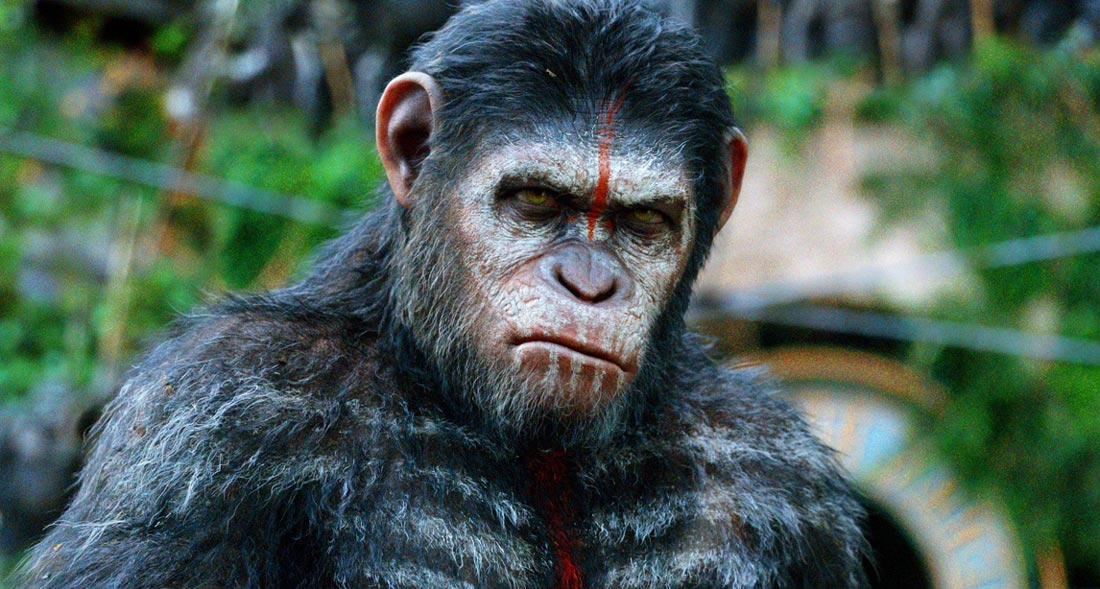
There’s no doubt that a really good “what if?” scenario – a fascinating premise that envisions a society or world with a pivotal difference to our own – is a big hook for a speculative fiction book or film. An intriguing premise will almost always entice me to go see the film at the cinema, particularly a science fiction film.
On the whole, science fiction does these “what if” scenarios really well (especially dystopian sci-fi), and the concepts are memorable. I’m sure many people could guess which popular science fiction films the below scenarios refer to: Continue reading
The ‘Ye Olde’ in Epic Fantasy: 6 More Archaisms and Why Authors Use Them

Last week I listed some English archaic forms often seen in epic fantasy novels: things like “here be dragons” and “unsavoury louts they were” and “prithee”. This week I’m continuing with a few more ‘ye olde’ words fantasy authors like to throw into the mix, as well as having a look at why they do it.
So without further ado, and again with the help of Susan Mandala’s Language in Science Fiction and Fantasy: The Question of Style, here are the remaining 6: Continue reading
The ‘Ye Olde’ in Epic Fantasy: 5 Archaisms Explained

The other day I found myself explaining the word ‘wont’ to someone. Not the contraction ‘won’t’, but rather its apostrophe-less unrelated twin:
Wont
adjective: accustomed, used, given, inclined. e.g. “As he was wont to do”
— New Oxford American Dictionary
In other words, the one almost no-one uses. I believe I was attempting to add a vaguely historical flourish to a comment I was making. Unfortunately the person I was speaking to was German, and wont turned out to be a word they hadn’t yet added to their English vocabulary (can’t blame them really).
The Battle of the Bookshelves

Photo by Nicola Alter (CC BY SA 4.0)
Okay, it’s not really a battle. But when you look at the two bookshelves in my house – two identical IKEA monstrosities – there’s an obvious difference.
The one on the right is stuffed with autobiographies and memoirs and a myriad of non-fiction… books on economics and the Internet age and business and psychology and politics. Nelson Mandela’s Long Walk to Freedom cosies up next to Jared Diamond’s Collapse, and a rather ominous book titled The Shallows: What the Internet is Doing to Our Brains. Continue reading

