
I haven’t updated my blog in a long time – 5 years to be exact. When COVID hit I let it slide, then got busy with life and other projects, including writing two novels 🙂 But I always intended to return to it “one day”, and it seems that day has finally arrived. I’m planning to start posting again once or twice a month, so I’m not sure how many of you are still out there receiving this message, but I hope you’ll continue this journey through the fantasy-verse with me!
___________________
I was recently thinking about one of my favourite novels, Piranesi by Susanna Clarke, and it reminded me that there’s a quality some science fiction, dystopian and speculative fiction stories have—a rare one—that I absolutely love. It’s hard to describe, and perhaps even harder to achieve, but I’d characterise it as a tantalising sense of wrongness intertwined with mystery, often (though not always) occurring at the beginning of a story, which usually precedes a giant, reality-altering twist.
It’s that growing conviction that things don’t make sense in the world, that something very odd is happening, perhaps even something sinister, but you don’t know what it is yet. You just have this sense that the situation is off, wrong somehow, and that you, and perhaps even the characters, have a fundamental misunderstanding of the reality in which they find themselves. At the same time, you can feel in your bones that you are going to find out what it is, and that when you do, it’s going to be a hair-prickling revelation or a fantastically unexpected twist. This feeling seems to often be evoked when the initial story world, or simply the story we think we are about to be told, is increasingly questioned, then ultimately flipped on its head.
Some sci-fi examples that come to mind are the films Moon, Source Code, and The Island, and the TV shows Westworld and Paradise, but I’ve also encountered a similar feeling in fantasy and dystopian novels like Piranesi and Wool. Additionally, I can think of stories that don’t necessarily ‘throw us in the deep end’ at the start, but that still instil a strong sense of the uncanny and unknown at certain points in the narrative: Project Hail Mary, Groundhog Day, Edge of Tomorrow, Meet Cute, Arrival (and the short story it is based on, ‘A Story of Your Life’), The Prestige, and The Sixth Sense.
What always impresses me about these sorts of story openings is that usually, as a writer, confusion is the last thing you want to create. Conventional wisdom suggests you should clearly communicate the scenario at the outset, withholding some mysteries and raising some questions, but still grounding the audience as quickly and succinctly as possible in your world and characters. If they get lost in a sea of confusion or snag on inconsistencies and plot holes, they might abandon ship.
Yet these particular types of stories seem to offer just enough grounding for us to understand what’s happening on the surface, while at the same time introducing just enough dissonance to make us aware things aren’t adding up… a perfectly calculated dose of confusion that promises you’re on the cusp of a fascinating resolution.
I adore the goosebump-inducing curiosity this mixture evokes… a kind of “Wait what? Something’s not right here…” that has me hungry to figure out “the truth” of the situation. But what is it about these stories that creates this tantalising feeling?
How do stories achieve this?
I’ve noticed stories that evoke this tantalising sense of wrongness often feature:
SPOILER NOTE: I’ll do my best to avoid any major spoilers, e.g. I won’t reveal what the penultimate twist in these stories turns out to be, but if you’re spoiler sensitive, you might just want to read the headings!
1. A character whose memory or perceptions prove unreliable

In the novel Piranesi, for example, we encounter a character eking out a living in a labyrinthine and lonely world of giant statues, stairways, tides, and oceans, a man who has no memory of how he got there and who seems to share it with one other living inhabitant known only as ‘The Other’. He eventually comes to realise his memories and interpretations of events cannot be entirely trusted.
In other stories, such as Source Code or Westworld, key characters lie and choose to keep things from us and from the other characters, making them unreliable narrators.
2. A scenario that feels sinister, illogical or mysterious from the outset
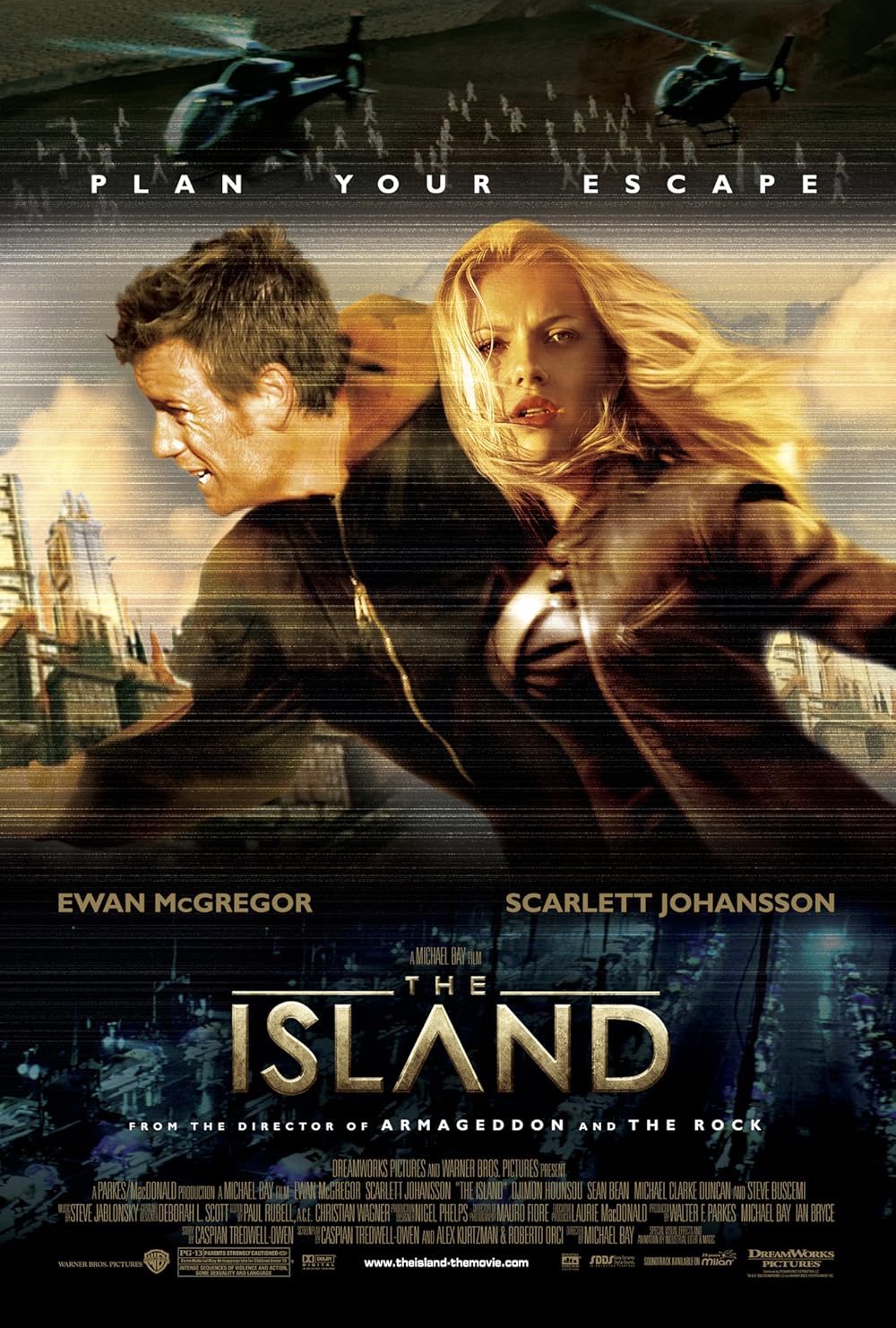
In The Island, we encounter people living inside a claustrophobic facility in a supposedly contaminated world, all hoping to be selected in a lottery to go to one of the last liveable places on the outside, ‘The Island’. Yet we immediately notice how controlled every aspect of their lives is and how naive they are, and we wonder why their health and eating habits are so regulated. We also can’t help but suspect the paradise-like utopia of ‘the island’ presented to them in videos is a cover for something far more sinister.
The novel Wool starts with a similarly claustrophobic post-apocalyptic setting of people living in an underground silo, but leaves us in the dark as to how they ended up there and what happened to the world outside.
3. A scenario that initially feels ordinary, then slowly becomes extraordinary
Sometimes the reality established at the outset feels normal, then becomes increasingly sinister and abnormal as more details emerge that make us question our understanding of it.
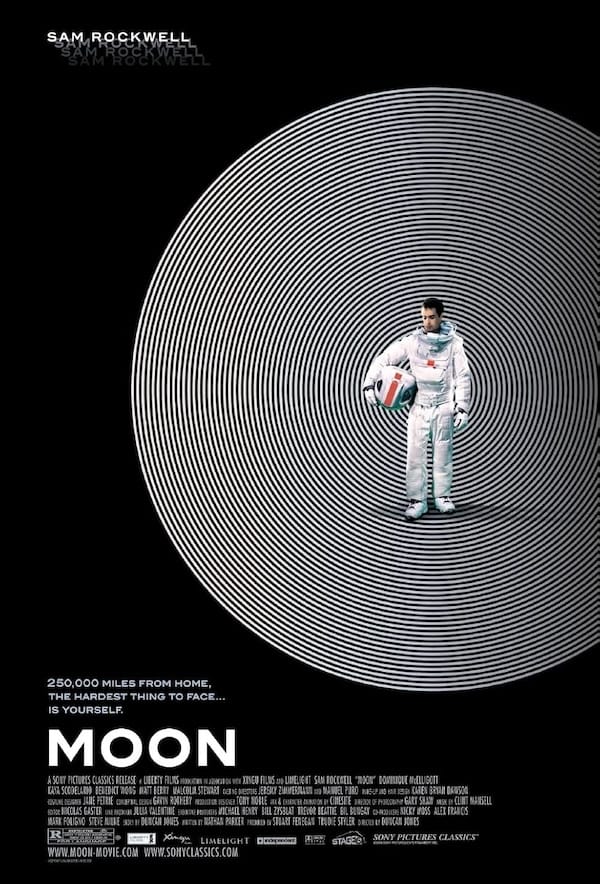
In Moon, we meet a lone astronaut going through the daily grind of maintaining a lunar space station while looking forward to the imminent end of his mission, when he will go home to his family. Yet after he’s almost killed in an accident, new mysteries and inconsistencies in his interactions with the station’s systems make both him and us realise we’ve misunderstood something fundamental about the entire scenario.
The TV Show Paradise achieves a similar transition from ordinary to extraordinary within the course of the first episode.
4. Rigid rules or fundamental principles are introduced, then broken
For example, in Piranesi, the character is very focused on the exact number of people, living and dead, that inhabit this strange world with him, and feels he knows it inside-out. Later, the implication that there might be a new, unknown person there throws this reality off balance.
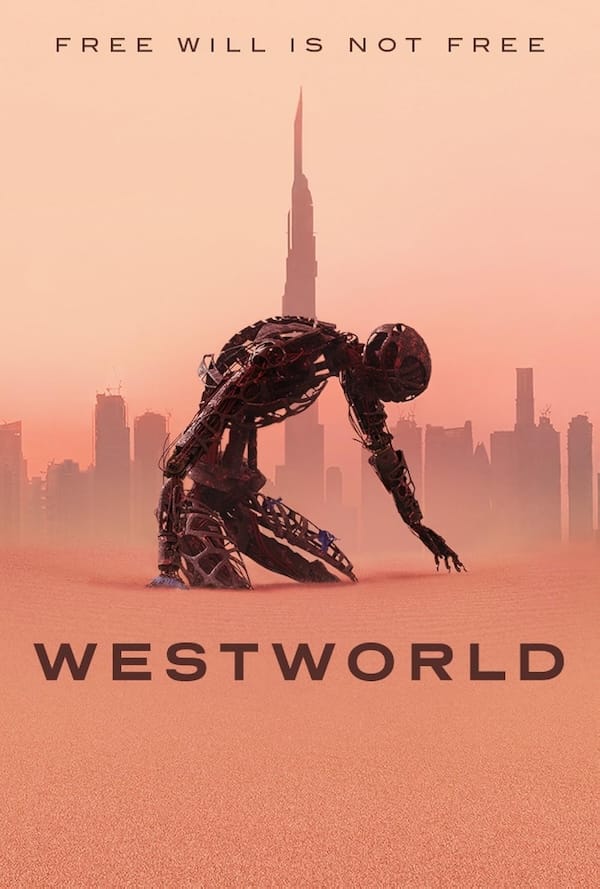
In Westworld, the significance of the phrase “it doesn’t look like anything to me” is established early on, and later used to great effect to show just how fundamentally rules have been broken.
5. A sense of a mystery unraveling as more details and clues emerge
Piranesi initially captivates us with the otherworldly vividness of the place the character finds himself in, but it is ultimately the unusual additional details that trickle in that build true curiosity and engagement: the remains of dead people, the strange behaviour of the Other, the discovery of a piece of rubbish that doesn’t belong, missing pages in a diary. These clues compound to make us realise all this strangeness will have an explanation, one we can’t currently fathom but are hungry to learn.
In the novel Wool, and indeed, throughout the Silo trilogy (and the TV show adaptation of it), new clues keep emerging that continually expand our understanding of the world both outside and inside the silo, and of how the silo came to be.
6. Classic horror and science fiction elements that feel innately unsettling
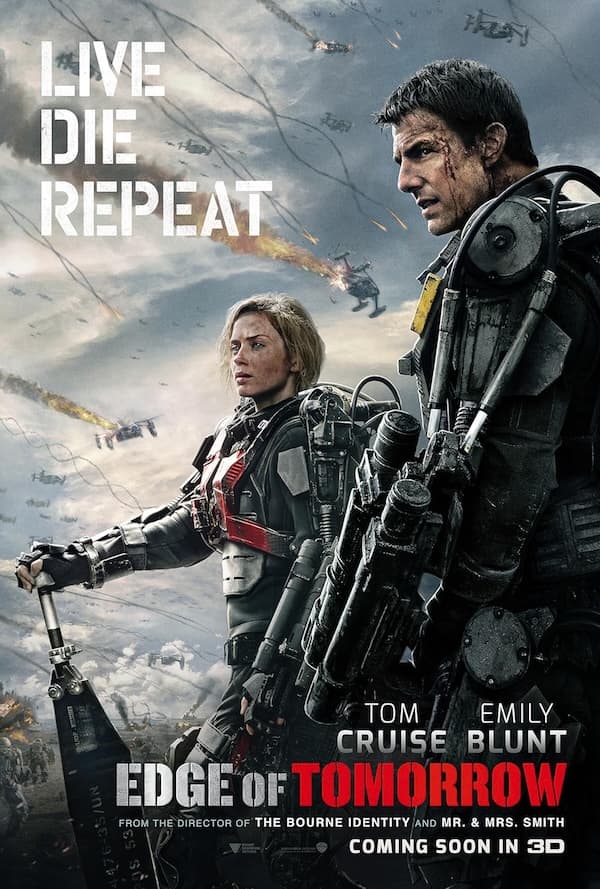
I noticed the wrongness so essential to these stories is also often heightened by classic plot elements that we have found disturbing as human beings for decades, sometimes even millennia – things like amnesia, time loops, out of order timelines, repetition, doppelgangers, robots, clones, fake realities, secretive authority figures, resurrection, and dystopian societies.
The films Edge of Tomorrow, Source Code, Meet Cute and Groundhog Day, for example, all hinge on the uncanny effect of repetition and time loops, with the same sequence of events repeating over and over again, often in a way that neither us nor the main character can initially explain. This uncanny feeling can be further heightened when the character dies at the end of a sequence but is ‘resurrected’ as it begins again.
___________________
Ultimately, there’s no exact ‘recipe’ to create this feeling, and indeed some of the best stories out there are the ones that find new ways to unsettle us and hit us with completely unexpected, world-distorting twists we don’t see coming. I’m certainly hoping there will continue to be new stories out there that surprise me in this way, since I love reading and watching them. And if one day I can capture even a shred of that unsettling, mysterious feeling in my own work, I’ll consider that a huge success.
But these are just some of my personal observations, and I’d be curious to know if anyone else has noticed or enjoyed this quality in stories. If so, how would you describe it? Are there any good examples I’ve forgotten to mention? Or are any I’ve mentioned that are favourites of yours for the same reason? Let me know in the comments.
Discover more from Thoughts on Fantasy
Subscribe to get the latest posts sent to your email.

Piranesi definitely had that disconcerting ‘otherness’ about it – yet (unlike some rather strange arty films I’ve seen) that ‘otherness’ did resolve itself in a satisfying and coherent plot/narrative.
Another film with initial ‘normality’ that gets distinctly ‘odd’ is the 2025 movie ‘Companion.’ I’ll say no more! 😀
LikeLiked by 1 person
Yes I was also worried at the start of Piranesi that the ‘otherness’ wouldn’t resolve and it would just remain obscure and arty (which I’m never a fan of in books or films!) but luckily it did all have a satisfying explanation in the end.
And I’ll definitely add ‘Companion’ to my list, I’m intrigued!! 😀
LikeLike
Another good example for this phänomen is the brilliant TV series “The good place” 🙂
Thnak you very much for your blog-post, I got some new recommondations out of it. What I personally like about stories wich have the elements in it which you described: They challenge your brain power in “Oh, I can figure this put” and then prove you wrong (exciting! new things to discover and you did not see it coming!) or prove you right (also very exciting! you figuerd it out!). In a way like a good crime novel but without all the gruesome murders and gore 😉
LikeLiked by 2 people
Oh yes I’ve been meaning to watch “The Good Place“, I hear it’s great! You have inspired me to finally figure out which service I can watch it on. And true, that there’s definitely a “whodunnit” sort of element to these stories like in a murder mystery, where you’re enjoying trying to figure it out and seeing if you get it right.
Really glad you liked the post and got some new recommendations! ☺️
LikeLike
Welcome back! It isn’t exactly like what you’re describing, but I do think you should add “The Strange Case of Jane O” by Karen Thompson Walker to your TBR; I’d be really curious to see what you think! It will be in my best of the year this year.
LikeLiked by 1 person
Thanks, just added it to my TBR! I think you mentioned her to me before as an author I might like, so I’m very curious.
LikeLike
I’m currently reading Wool and it’s a mindf*ck right from the beginning! Particularly since it teases a particular twist and then shows that potential twist to be false, like a red herring.
LikeLiked by 1 person
Yes I was so impressed by how Wool did that! It really did make you expect one twist only to give you another, not to mention thwarted other typical narrative conventions in ways I really wasn’t expecting (e.g. regarding the POV character the story begins with and how their story unfolds)
LikeLiked by 1 person
It seems to be very skilfully written, I’m enjoying it. 🙂
LikeLiked by 1 person
Nicola! I was so excited when I saw a new message in my inbox from Thoughts on Fantasy! It has been a while. I’ve always loved reading your insightful, well-thought-out posts, and glad to see you’re back at it.
Silo is one of my favorite shows. I haven’t read Wool, and didn’t even realize the show was based on those novels. I’d heard of Wool, but nothing that I read or heard about it or Silo had connected the two for me until I read your post just now. So, maybe I wasn’t paying attention, but thanks for informing me!
Have you watched the 2013 film, Coherence? It’s one of the smartest sci-fi movies ever made, and might well be my top-favorite sci-fi movie of all time. It starts out pretty ordinary, and the otherness slowly creeps up on you, until it absolutely slams you in the brain at the end. If you haven’t seen it, I highly recommend it. I feel like going and watching it again right now. 🙂 Cheers!
LikeLiked by 1 person
Thanks MK!! What a lovely welcome back to receive ☺️ I remember your insightful comments on my past posts too so I’m really happy you’re still reading.
Glad I was able to make the connection between Wool and the TV series, both really are excellent, I’m amazed what a good job they’ve done of the adaptation. I can’t wait for the next season, even though I already know what’s going to happen from the books.
I’d never heard of Coherence but it sounds amazing and like exactly my kind of film. I’ll definitely add it to my to watch list, thanks for the recommendation!!
LikeLiked by 1 person
I watched Coherence again last night after writing the above comment, and it’s still just as captivating for me as ever. Even with knowing everything that happens, it’s still a pleasure to watch, admiring how the writers unfolded events and doled out information to the audience. Cheers!
LikeLiked by 1 person
Happy to see you’re back, Nicola. As I read, I kept think of Leviathan Wakes by James S.A. Corey. The way both the book and the TV adaptation, The Expanse, start hints at things not being right in the universe. That unsettling feeling then becomes a larger mystery as the story progresses. But it’s that unsettling feeling that got me hooked on the story first, pulling me into the mystery.
LikeLiked by 2 people
Thanks Zezee! That’s a good point, I haven’t read Leviathan Wakes yet (I’ve been meaning to) but I LOVE The Expanse, and you’re right, it does really have that unsettling, mysterious, almost creepy feeling from early on that really builds. It hooked me too.
LikeLike
I found this blog earlier in August while I was researching for a blog post of my own (It was the Evolution of Fairy Tales blog btw great blog loved it) and was sad to see that it had been abandoned for a long time but good to see that it’s back. Now I personally love these types of twists. They’re the only one’s that really shock me nowadays. One of the stories that blew me away with a twist like this was from a Visual Novel called Doki Doki Literature Club which not only breaks the rules of the story but also breaks the fourth wall and refers to you the reader directly (even by name through some very interesting use of coding Don’t worry it isn’t spyware just a neat trick).
LikeLiked by 1 person
Great you found and liked the fairy tales post! I had fun writing that one, even if it was a while ago now. And that sounds like an amazing visual novel – I love it when stories break the fourth wall in an effective and surprising way. Cool idea to even do it by name using a coding trick, I’ve never heard of something like that before!
LikeLike
Such a nice and interesting read Nicola! So eloquent and beautiful written too, love the ‘tantalising sense of wrongness intertwined with mystery’ sentence. Definitely some food for thought concerning my own take on suspense while crafting stories. Although not so familiar with the scifi/fantasy genre in books, I was also pleasantly reminded that I actually recognized most of your film references 😉 . I’m putting Piranesi on my future TBR-scifi-booklist! Looking forward to your next blog!
P.S. I might have mentioned this before, but my most favorite scifi film ever is Gattaca (maybe shared place with Blade Runner) which does set out with already a twist to that ‘tantalising sense of wrongness’.
LikeLiked by 1 person
Glad you enjoyed the post! I can definitely recommend ‘Piranesi’ – it’s one of those books that appeals to both SFF and non-SFF readers I think, since it’s not your typical fantasy or sci-fi and in some ways it defies easy categorisation. It has an almost mythological feel to it… I think you’d like it!
Oh yes I ADORE the film Gattaca, it’s one of my favourites too! And you’re right, it does have that wrongness and mystery to it at the start as well. Btw the same scriptwriter who wrote that also wrote ‘The Truman Show’ which is another favourite of mine… in fact I think I wrote a post eons ago about him 🤔 Just did a search and found it: https://thoughtsonfantasy.com/2014/06/23/do-you-ever-think-of-the-scriptwriter-when-choosing-a-film/
Anyway, thanks for reminding me, it’s an awesome film!
LikeLike
Pingback: Let’s Rewind: July & August 2025 – Zezee With Books