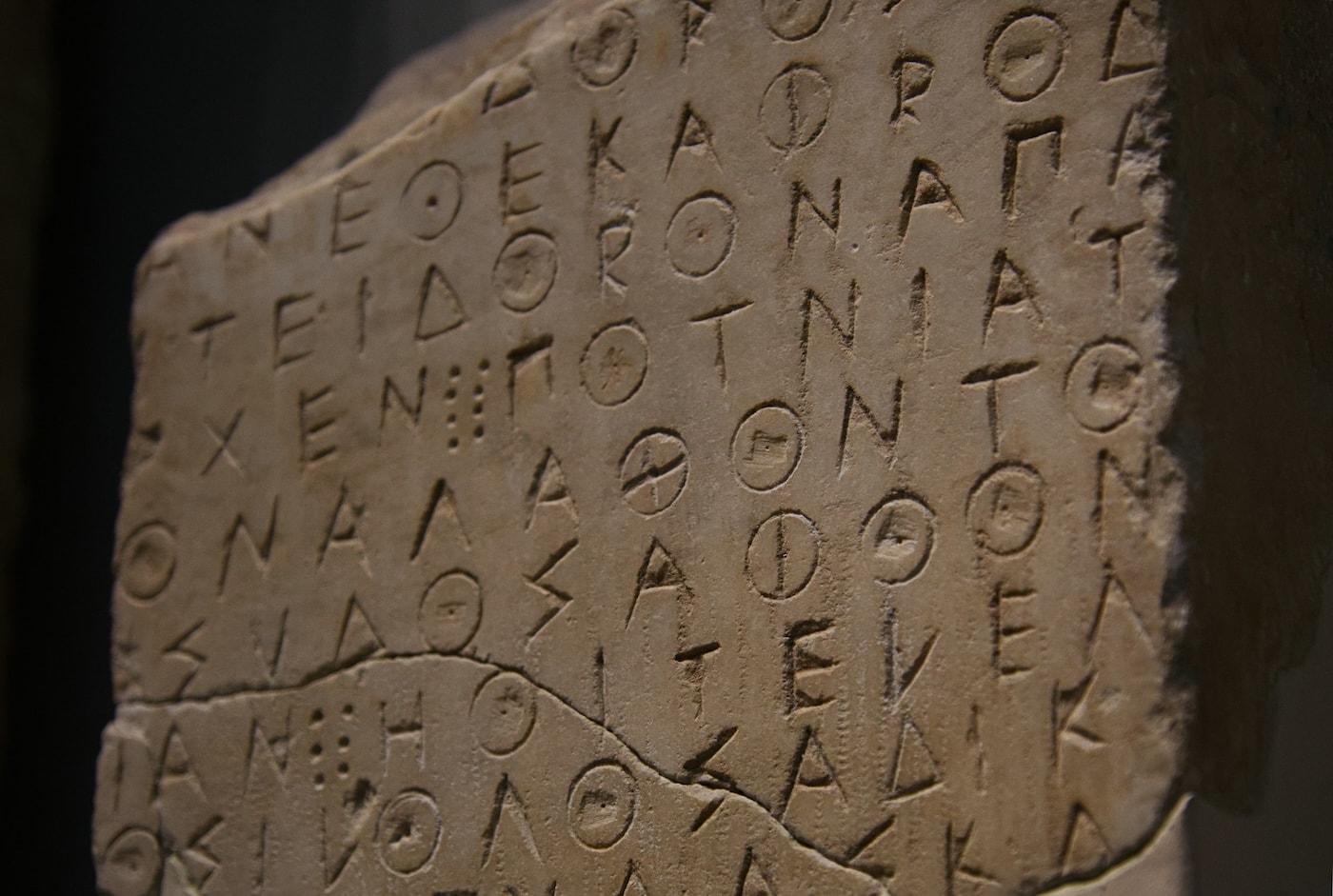
I’ve always loved science fiction and fantasy stories that focus on language, translation, and linguistics. And I’m not talking about the Tolkien-esque creation of whole fictional languages to furnish invented worlds, which I’m also in awe of, but about books where the very act of communication or translation itself becomes core to the plot.
Why do these stories appeal? I think it’s that mysterious sense that something needs to be “decoded”, the bridging of culture gaps, and the unlocking of exciting new possibilities for human (or non-human) connection. The theme of language itself also just inherently feels a little magical. The fact our brains are capable, with enough effort and exposure, to transform unintelligible babble into something meaningful, is remarkable. I admire the almost superpower-like ability of polyglots to shift seamlessly between different languages, and I enjoy encountering characters like this in stories.
Then there’s the fact that fantasy and sci-fi books about translation also often explore issues of exploitation, trade and colonialism in compelling and nuanced ways, throwing us into situations where one dominant language is squeezing out another, or where empires tussle to gain the upper hand during negotiations done via translators and ambassadors.
A lot of the books I’ve loved in this space have also inspired my own writing. My epic romantasy that’s currently on submission features two enemy soldiers from very different cultural backgrounds who find a connection in a fable they both loved as children, where a translation crossed borders that little else did. And the speculative thriller I’m currently editing centres on a linguist whose decipherment of a long-extinct language uncovers ancient secrets that endanger her life. The latter was partially inspired by two of the stories in the below list, and after writing it, I discovered other great SFF books in this vein through recommendations from friends or searches for comparative titles.
So I thought I’d give a shout out to some of these linguistics-fuelled speculative novels and list my 6 favourites:
1 Embassytown by China Miéville
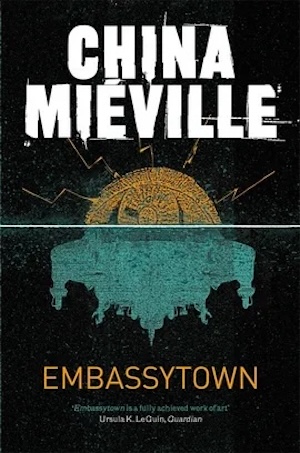
A school friend of mine who studied linguistics (one of the many things I’d have loved to study in an alternative multiverse life) recommended the novel Embassytown by China Miéville to me, saying many of her linguist friends raved about it. Now it’s my turn to rave.
While it admittedly starts a little slow, and spends time on some things that aren’t relevant to the main plot, once it kicks into gear this is a truly brilliant, enthralling book. It takes place in the human ‘embassy’ zone on the home planet of the Arieke, an alien species who cannot lie. Each Arieke speaks with two mouths, and can only be communicated with by two specially trained and augmented human twin translators speaking in unison. At some point, due to a language-related issue that I won’t divulge so as to avoid spoilers, things on this planet start to go very, very wrong.
There is so much fascinating, mind-bending stuff going on in this book to do with language, metaphors, truth, lies, trade, foreign influence and power, that I couldn’t possibly explain it all… but it is well worth a read, especially if you love books that play with linguistics in clever ways.
2. A Story of Your Life by Ted Chiang
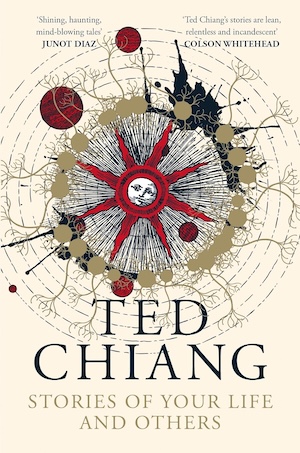
When I first saw the 2016 film Arrival in the cinema, I was blown away, and when I rewatched it recently, I found myself equally enchanted. If you’ve never seen it, it’s about the moment aliens arrive on earth. The linguist who tries to decode their language and script – one vastly differently to any human language – has to avoid potentially deadly miscommunications.
A few years ago, a friend and fellow blogger, Anjali Is Always Reading, mentioned that she enjoyed the short story that the film based on – ‘A Story of Your Life’ by Ted Chiang – so I bought the collection, Stories of Your Life and Others. The tone of the story is different, and some of the core plot details have been adapted for the film, which makes for a new experience of the narrative, especially the ending. I found both versions utterly captivating and thought provoking. I would add that the entire short story collection is worth reading if you like high concept, mind-mending science fiction.
3. Lexicon by Max Barry
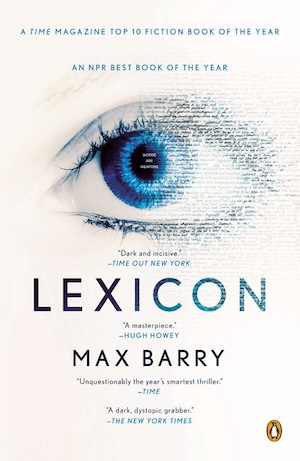
Lexicon is a novel I stumbled across online when I had just finished writing my own language-focused thriller and was looking for comparative titles to pitch it with. It is set in Australia and US, and focuses on a small, secretive, elite group of people who can use language to control others in a way that is reminiscent of Marvel’s Jessica Jones (another series I loved).
The system for how the language control works is very clever, with it being to some degree dependent on assessing what type of person someone is and using the right words to manipulate them. The process is eerily akin to the way social media companies and advertisers profile us online – something that also comes up in the book. I was a bit frustrated by the passivity of one of the main characters, but it makes total sense for the story that he’s that way, and it was a really engaging, suspenseful and thought-provoking read.
4. Babel by R. F. Kuang
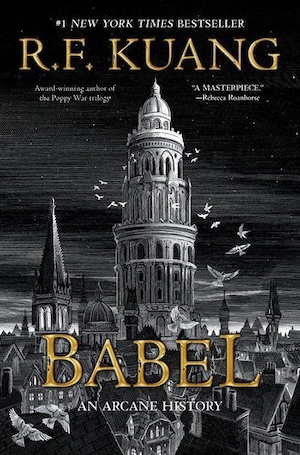
Babel by R. F. Kuang is a dark academia fantasy set in an alternative history version of Oxford where students born overseas are trained and exploited in order to perform the translation-based magic that keeps the British empire running. While on some fronts the story is grimmer, slower, and more didactic than my tastes normally skew, I really admired the unique and complex translation-based magic system. I also loved how fundamental it was to the plot and to the themes of colonialism, racism, and exploitation that the novel explored.
Interestingly, the historical Opium Wars era that this novel was inspired by also seem to have been an inspiration for Mieville’s Embassytown, or at least, both books remind me of this period, exploring what happens when power-hungry empires try to seize control of trade and exploit translators and ambassadors to gain monopolies.
5. Project Hail Mary by Andy Weir
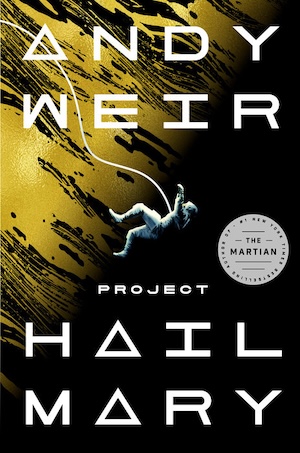
I recently wrote a post about why Project Hail Mary is such an engaging story, so I won’t go into too much detail here, but basically, it’s a favourite of mine, and it was one of the inspirations for my own novel, along with the film Arrival.
One part of the novel involved the protagonist facing a conundrum that linguists on earth have faced for centuries – when you encounter a new, unstudied language for which you have no translator or dictionary, how do you learn it and communicate with its speakers? He uses similar field work and documentation methods that linguists use, but with the additional hurdle that the vocalisation and senses of the other speaker are totally… well, alien. I enjoyed experiencing them bridging that communication divide, with both sides working together to understand one another and forming a deep friendship.
6. We Have Always Spoken Panglish by Suzette Haden Elgin
This is not a book, rather a short story, but I had to include it. When I told to my cousin I was writing a novel about a linguist deciphering an ancient language, he sent me the link to We Have Always Spoken Panglish by Suzette Haden Elgin (unfortunately the link no longer works, otherwise I would have shared it here). I’m not usually a big short story reader, but I loved it. It’s about a linguist on a far away planet in an intergalactic future who stumbles across an intriguing mystery regarding the original, seemingly vanished language of the people living in its slums. I especially liked how it raised interesting questions regarding the “ownership” of language and cultural appropriation.
Haden-Elgin was a linguist herself, and you can see this expertise reflected in her writing. I also read her novel, Native Tongue, which is about women in an oppressed society who create their own secret women’s language. Although I appreciated the ideas explored, it left me a bit puzzled as to how the language was intended to work and remain secret, and I sadly didn’t enjoy it as much… but ‘We Have Always Spoken Panglish’ remains a favourite.
_________________________
Many of the above tales reference the mythical Tower of Babel. That ancient legend encapsulates so many of the things that are fascinating about this topic: the collective power that language gives us as human beings, the diversity of culture and speech it provides, but also the potential for conflict and division. It also teases the tantalising idea of an “original universal language” and reflects the way languages often share a common ancestor and diverge over time. Language is, after all, one of the things that sets us apart and defines us as human beings, and books that explore this touch on something at the core of what it fundamentally means to be human.
Have you enjoyed any of these? Or are there any others language-focused SFF novels and films would recommend? Feel free to mention them in the comments.
Discover more from Thoughts on Fantasy
Subscribe to get the latest posts sent to your email.

A fascinating post reflecting how much more there is to language than simply ‘communication’ and how speculative fiction is great at exploring that. It is about how we think, how we shape culture and also how we control. No wonder that so much if historical imperialism has been targeting native languages (like Welsh and Gaelic) as well as trying to impose an empires own faith. Even in 1984 Orwell portrayed the importance of controlling language as a key step in controlling thought, people and personal expression. Like the Borg English is a language that assimilates others and grows more powerful through doing it! 😀
LikeLiked by 1 person
Yes SFF really is so good at exploring topics like these on deeper levels. And true 1984 is a great example too of a book that explored the power of controlling language to control people! I never thought about English like the Borg before but that is a very apt simile 😅
LikeLike
Thanks for these recommendations. I’ll have to check some of them out.
One rather different example I’ve loved as a kid was a children’s SF book from the 50s called The Future Took Us by David Severn (apropos of nothing, Severn was the son of Tolkien’s publisher Sir Stanley Unwin). It’s set around the year 3000 and features a future version of English that’s evolved about the same as in the past thousand years.
LikeLiked by 1 person
Oh wow that sounds fascinating, I’d love to see how he envisioned English evolving in 3000 years! And that’s a fun Tolkien connection – I’m also only just realising that Sir Stanley Unwin is probably where the name in the publisher Allen & Unwin comes from…
LikeLike